• Aluminum Extrusion for Stable and Cost-Effective Cooling Solutions

    Engineering-driven aluminum extrusion for EV, automotive, and energy-related applications. Aluminum extrusion is often the most robust manufacturing solution when geometry allows.
    It is widely used in applications that prioritize long-term stability, consistency, and cost efficiency over peak performance.
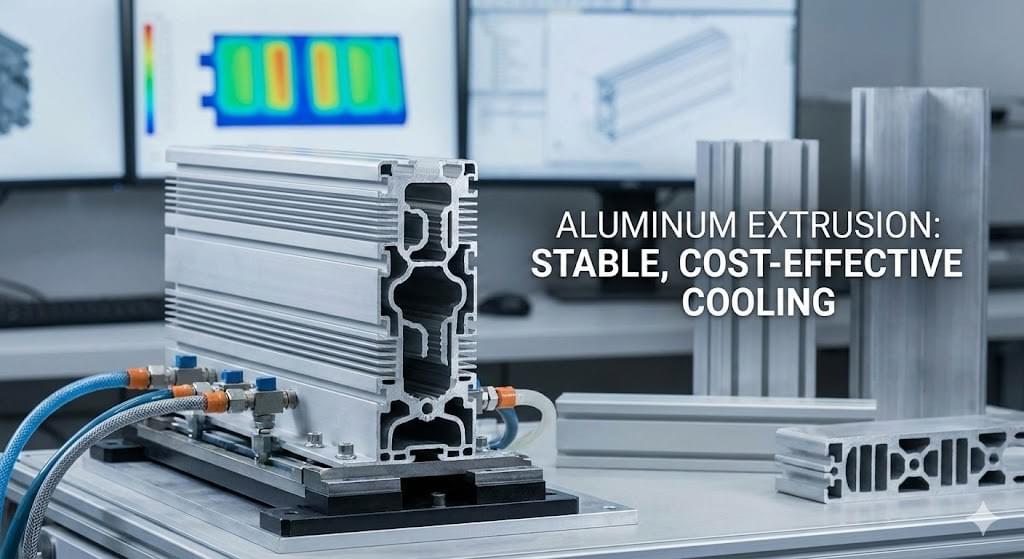
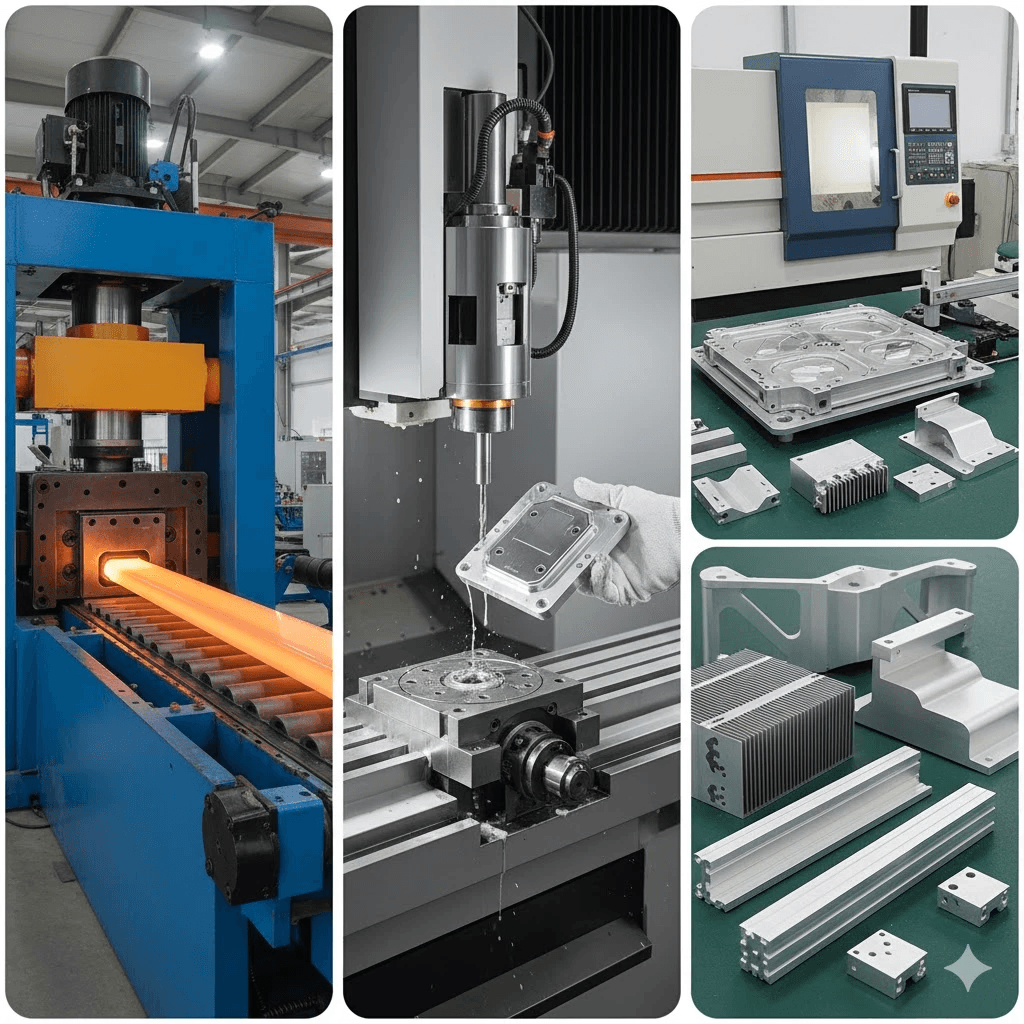
    Engineering-driven aluminum extrusion for EV
  • Why Aluminum Extrusion Makes Engineering Sense

    Aluminum extrusion is not about maximum design freedom — it is about predictability and scalability.

    Extrusion is especially suitable when:

    • Long, straight profiles are acceptable
    • Production volume is medium to high
    • Consistency and repeatability are critical
    • Cost control at scale matters

    In many thermal and structural applications, extrusion provides the best balance between performance, stability, and manufacturability.

  • Extrusion Applications by Product Category

    This section explains how Aluminum extrusion is applied across different product categories, and where engineering caution is required.

    Aluminum extrusion is selectively applied in EV systems, mainly for non-safety-critical or semi-structural cooling components.

    Typical extruded EV parts include:

    • Cooling-related structural profiles
    • Auxiliary thermal management components
    • Support structures with straight internal channels

    Engineering considerations for EV:

    • Suitable when geometry is simple and inspectable
    • Often combined with CNC post-machining for interfaces and sealing
    • Not typically used for safety-critical battery cold plates

    In automotive applications, aluminum extrusion is widely used for structural and thermal profiles.

    Typical extruded automotive parts include:

    • Heat dissipation profiles
    • Structural rails and supports
    • Functional aluminum sections requiring consistency at scale

    Why extrusion for automotive components:

    • Excellent dimensional consistency
    • Competitive cost for volume production
    • Stable material properties

    Aluminum extrusion has limited application in motorcycle and racing components.

    Typical usage scenarios:

    • Structural or support profiles
    • Parts without complex geometry or aesthetic requirements

    Engineering note:

    • Performance and racing parts usually prioritize CNC machining for precision and appearance
    • Extrusion is mainly used where function and consistency outweigh customization

    Engineering Considerations for Extruded Aluminum Parts

    • What Engineers Evaluate Before Choosing Extrusion
    • Cross-section must be extrusion-feasible
    • Internal channels are typically straight and open
    • Secondary CNC machining is often required for:
      • Sealing surfaces
      • Mounting interfaces
      • Assembly features
    • Design should allow for inspection and maintenance

    Extrusion defines geometry — design must respect the process, not fight it.

  • Extrusion vs CNC vs Die Casting (Engineering View)

    To better understand how engineers choose between aluminum extrusion, CNC machining, and die casting for cooling components, you may find this article helpful:

    👉 CNC vs Die Casting vs Extrusion for Aluminum Cooling Components.

  • Extrusion Capability & Engineering Strength

    Our aluminum extrusion capability is built for engineering-grade thermal and structural applications — not commodity profiles.

    Key extrusion capabilities include:

    • Aluminum extrusion profiles with straight internal channels
    • Medium to large cross-section profiles suitable for thermal management
    • Stable dimensional control for long-length parts
    • Material options commonly used for thermal applications (e.g. 6061, 6063)

    Engineering advantages of our extrusion solutions:

    • Close collaboration between extrusion and CNC machining
    • Post-machining of critical features such as:
    1. Sealing surfaces
    2. Mounting interfaces
    3. Assembly references
    • Design support to ensure extrusion-feasible geometry from early stages

    Quality & consistency focus:

    • Emphasis on repeatability for medium to high-volume production
    • Dimensional verification after extrusion and secondary machining
    • Engineering review for inspectability and long-term reliability

    Our extrusion capability is designed to support real-world production — not just profile manufacturing.

  • aluminum extrusion cooling profile for thermal management applications
  • Why Choose Wometal Aluminum Extrusion

    We combine engineering expertise, precision equipment, and strict quality control to deliver reliable Aluminum Extrusion solutions for automotive and EV components.

    Section image

    One-Stop Production

    From mold design, casting, machining, to finishing in one facility.

    Section image

    High Consistency

    Tight process control and automated production lines.

    Section image

    Material Expertise

    Aluminum ADC12, A380, and custom alloys available.

    Section image

    Engineering Support

    DFM and mold optimization for manufacturability.

    Section image

    Quality Assurance

    100% dimensional inspection and surface testing.
  • When Extrusion Is the Right Choice — and When It Is Not

    Recommended When:

    • Long-term stability is prioritized
    • Production volume justifies tooling
    • Geometry is simple and repeatable
    • Cost efficiency is a key requirement

    Not Recommended When:

    • Complex internal flow paths are required
    • Zero-leakage or safety-critical functions are involved
    • High aesthetic or customization demand exists

    In such cases, CNC machining or hybrid solutions may be more appropriate.

  • Not Sure If Extrusion Fits Your Design?

    Share your application requirements and system constraints.
    We’ll review your design from an engineering and manufacturability perspective — not just from a process capability standpoint.